
A Recovery Framework for Racialized Trauma—
Not a Debate About Racism
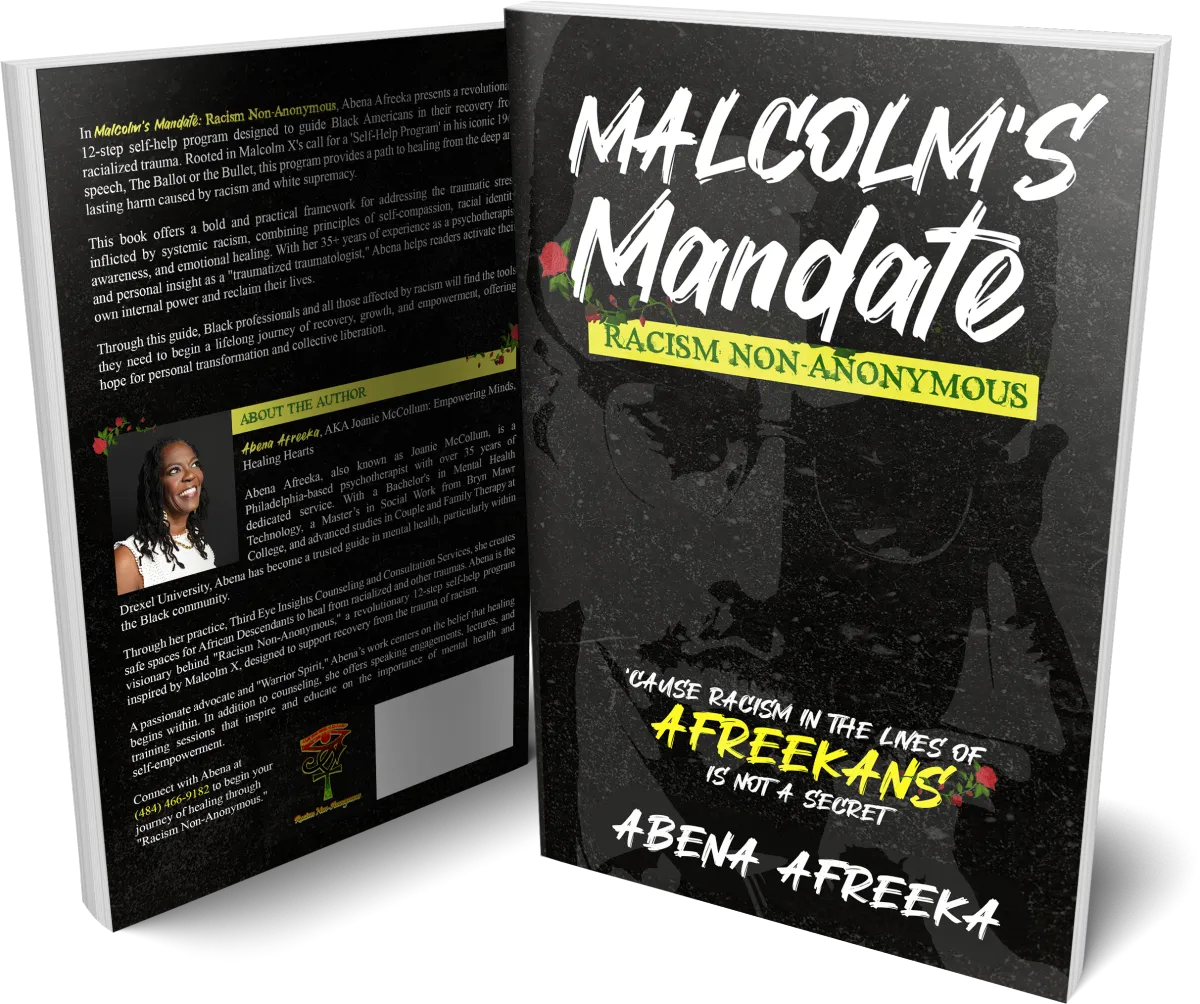
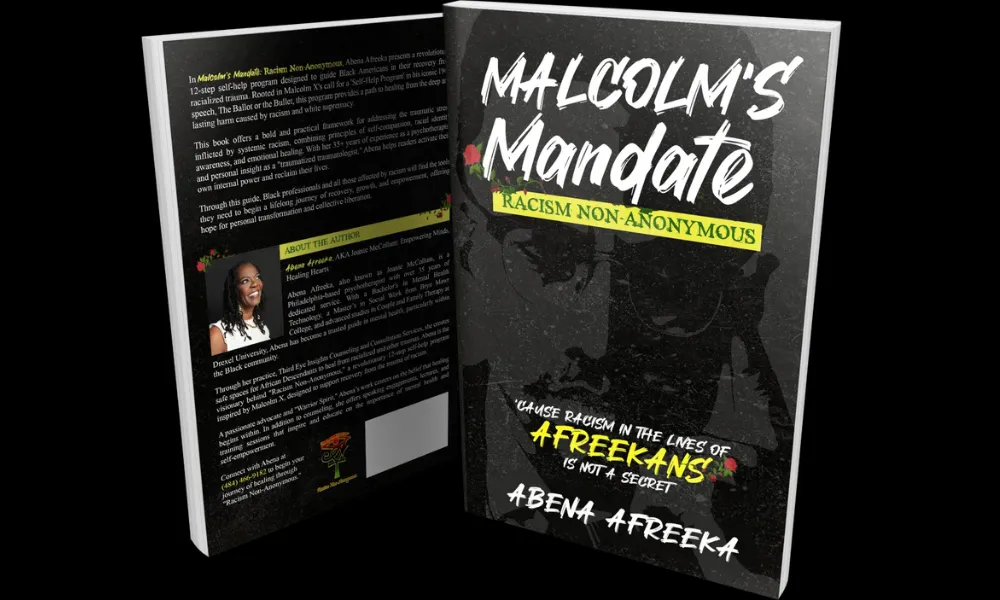
Malcolm’s Mandate: Racism Non-Anonymous reframes racism as a traumatic condition and offers a structured 12-step recovery framework designed to support healing, clarity, and self-trust for people of African descent.
A Note From Abena Afreeka
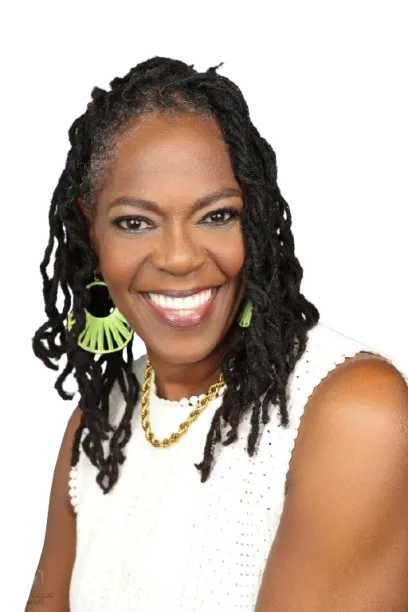
I did not write this work as an observer.
I wrote it as someone who has lived inside what it names—and spent decades helping others do the same.
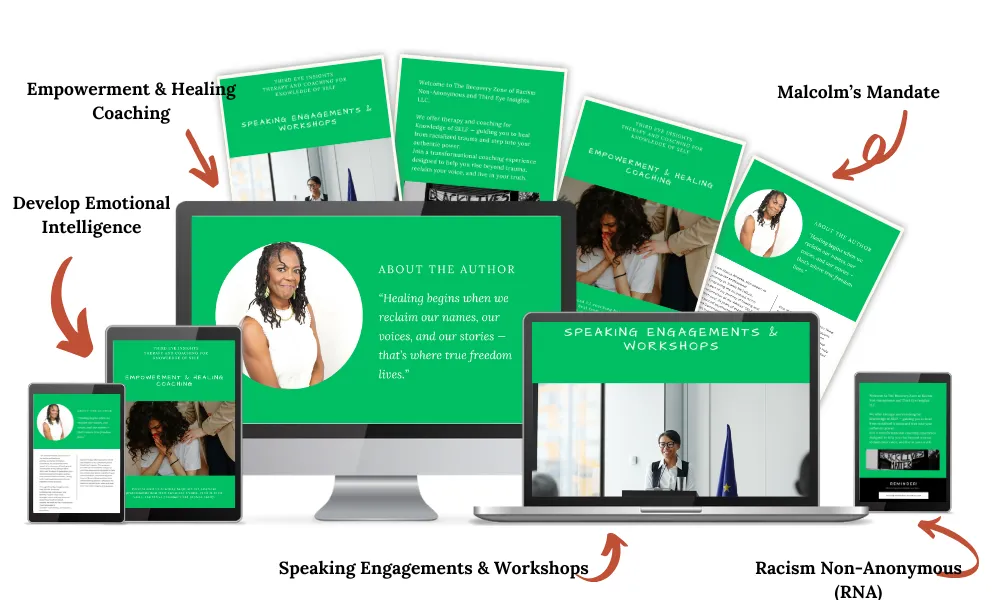
I am Abena Afreeka, also known as the Traumatized Traumatologist—a Philadelphia-based psychotherapist, communications coach, and founder of Third Eye Insights, LLC, a practice rooted in therapy and coaching for Knowledge of Self.
For more than 35 years, I have worked alongside individuals, families, and professionals—primarily people of African descent—witnessing how racialized and generational trauma shapes self-talk, relationships, health, and communication. Too often, I saw people blamed for behaviors that were actually survival adaptations formed in response to chronic harm.
My work is rooted in authenticity, compassion, and clarity. It integrates lived experience, trauma-informed practice, and a deep respect for the wisdom people carry—often beneath layers of conditioning and silence.
This book grew from that witnessing.
It is not about fixing you.
It is about helping you recognize what has been shaping you—and offering a structured path toward healing, clarity, and self-trust.
"Not everything that is faced can be changed, but nothing can be changed until it is faced.”
James Baldwin
The Genesis of Racism Non-Anonymous
Racism Non-Anonymous did not begin as a theory or a program. It emerged from lived experience—mine, and the countless stories I witnessed while navigating academia, professional spaces, and life as a Black woman.
Like many people of African descent, I learned early how to adapt. How to endure. How to remain functional in environments that required silence, self-suppression, and constant vigilance. I carried the weight of racialized and generational trauma while meeting expectations, achieving goals, and appearing “well.”
Over time, it became clear that what we often call coping is frequently survival. And survival, when left unnamed, does not resolve itself—it embeds.
Again and again, I saw individuals blamed for behaviors that were actually adaptations to chronic harm. Emotional restraint, hyper-independence, people-pleasing, anger, withdrawal—these were not personal failures. They were survival responses shaped by living inside a system that demanded adjustment without accountability.
Racism Non-Anonymous was born from the need to name that truth clearly.
This work reframes racism as a traumatic condition and offers a structured 12-step recovery framework designed specifically for people of African descent. It does not ask for denial, debate, or endurance. It asks for recognition.
Because silence does not heal.
Naming does.

"If you are silent about your pain, they'll kill you and say you enjoyed it."
Zora Neale Hurston
Malcolm’s Mandate: A Recovery Blueprint
"This work is rooted in Malcolm X’s insistence on truth, self-determination, and accountability—but it does not stop at inspiration. Malcolm’s Mandate offers structure.
Rather than asking readers to simply “be empowered,” this book provides a clear recovery framework for understanding how racism operates as a traumatic condition—and how its impact can be interrupted, processed, and healed.
Through guided reflection, psychoeducation, and practical recovery tools, readers are supported in:
Healing Racialized Trauma
Understanding how racism impacts the nervous system, emotional regulation, self-concept, and communication—and learning how to restore internal clarity and self-trust.
Confronting Microaggressions
Recognizing common communication patterns rooted in gaslighting and power imbalance, and developing grounded responses that protect dignity without self-erasure.
Building Community Support
Moving from isolation and silent endurance toward healthier relationships, community support, and communication that reflects one’s truth.
This is not a call to endure better.
It is an invitation to recover with intention.
Continue the Work With Support
Recovery does not end with insight alone. Integration happens through reflection, practice, and supported application.
When you purchase Malcolm’s Mandate, you are invited to a complimentary discovery call for Communications Coaching. This conversation offers a space to explore how the framework applies to your lived experience—and to identify next steps that honor your pace, capacity, and goals.
This is not about fixing or fast-tracking.
It is about support, clarity, and intentional movement forward.
If you are ready to explore what continued recovery could look like—with guidance—you are welcome here.
Facebook
Instagram
LinkedIn
Youtube
TikTok